[vc_row][vc_column width="1/2"][vc_column_text]One this page you will find:
- Peg fitting - Help making tuning easier
- Nut slot & string height - Strings that are too high are hard to play!
- Soundpost fitting - The soul of the instrument
- Bridge fitting - A perfect fit makes for a better sound
- Bridge & tailpiece position - Exact positioning is so important
- Violin set up video - A visual guide
[/vc_column_text][/vc_column][vc_column width="1/2"][vc_column_text]Other relevant pages:
[/vc_column_text][/vc_column][/vc_row][vc_row][vc_column][vc_column_text]
Violin/Viola Set up
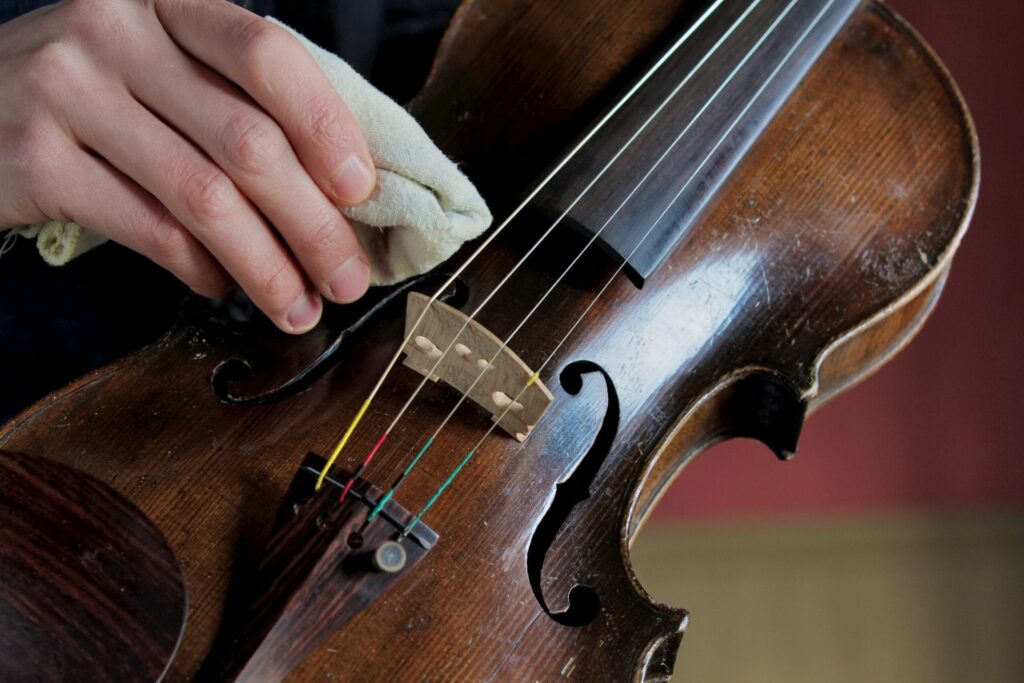
There are many different processes when setting up a violin or viola. All these processes combined makes a huge difference to the violin/viola in how it sounds, plays and feels. At a professional level even the smallest change can make a huge difference to a player, but it is also true that a student violin or viola can play easier, hold its tuning better and sound better when properly set up.
All of the violins and violas that we stock have been through this very process. In between hire agreements we also check every violin/violaover to ensure they are still as they should be. This makes all our violins and violas sound, and play better, which will only help and encourage someone learning to play.
We have outlined below the main steps involved in the violin/viola set-up.[/vc_column_text][/vc_column][/vc_row][vc_row][vc_column][vc_column_text]
Peg Fitting - Without a really good fit tuning can be very difficult
There is nothing worse than a violin or viola that does not stay in tune. The main reason for this issue is ill fitting violin pegs. We first check the violin/viola pegs themselves; they should be perfectly cylindrical and taper towards the end. If they are not, we use a peg shaper (just like a pencil sharpener) to make sure they are perfect. We then check the violin/viola peg box, the pegs should pass through and just show on the other side (they rarely do on new violins/violas out of the box) to ensure they grip well, but also turn freely and easily. To make the pegs fit perfectly we use a reamer to shave small amounts of wood away.[/vc_column_text][/vc_column][/vc_row][vc_row][vc_column width="1/4"][vc_single_image image="10343" img_size="large" alignment="center" onclick="img_link_large"][vc_column_text]Peg number three (with the white line) demonstrates a peg that doesn't yet fit. If they do not pass all the way through the peg box it is harder for the peg to grip. This makes tuning hard.[/vc_column_text][/vc_column][vc_column width="1/4"][vc_single_image image="10340" img_size="large" alignment="center" onclick="img_link_large"][vc_column_text]Small amounts of wood are shaved from the peg box using the correct sized reamer. This is done little by little to ensure the peg does not pass too far through the peg box.[/vc_column_text][/vc_column][vc_column width="1/4"][vc_single_image image="10339" img_size="large" alignment="center" onclick="img_link_large"][vc_column_text]The correct fitting of the violin peg. You should be able to see the violin peg slightly protruding from the peg box, this gives the peg as much grip as possible.[/vc_column_text][/vc_column][vc_column width="1/4"][vc_single_image image="10342" img_size="large" alignment="center" onclick="img_link_large"][vc_column_text]Once a peg fits perfectly it will, over time develop a shine where the peg fits snugly to the violin peg box. This clearly demonstrates how good the fit is.[/vc_column_text][/vc_column][/vc_row][vc_row][vc_column][vc_column_text]
Nut slot and string height
Any new violin or viola will need the violin/viola nut adjusting so the strings are the correct height form the fingerboard. If the string is too high the violin/viola becomes harder to play, especially for a beginner. Even the smallest adjustment can make a huge difference to the player. The nut slots also have to be filed at the correct angle, and a small amount of graphite dust is inserted making the string glide over the nut which will also help with tuning.[/vc_column_text][vc_column_text]Need to hire a violin? Hire today in our online store[/vc_column_text][/vc_column][/vc_row][vc_row][vc_column width="1/4"][vc_single_image image="10338" img_size="large" alignment="center" onclick="img_link_large"][vc_column_text]The string height at the nut is measured from the fingerboard up to the string. If the strings are too high it becomes difficult to play, especially for a young player or complete beginner.[/vc_column_text][/vc_column][vc_column width="1/4"][vc_single_image image="10337" img_size="large" alignment="center" onclick="img_link_large"][vc_column_text]Each nut string slot is carefully cut to the right depth to ensure the string is at the right height. The angle of the cut is also very important for both sound quality and tuning.[/vc_column_text][/vc_column][vc_column width="1/4"][vc_single_image image="10335" img_size="large" alignment="center" onclick="img_link_large"][vc_column_text]We use a feller gauge to measure the string height precisely. We cut the nut little by little, being careful not to cut to far.[/vc_column_text][/vc_column][vc_column width="1/4"][vc_single_image image="10336" img_size="large" alignment="center" onclick="img_link_large"][vc_column_text]When tuning the violin the strings need to be able to pass over the nut smoothly. To help with this we add a small amount of graphite which helps the strings to be able move freely and easily.[/vc_column_text][/vc_column][/vc_row][vc_row][vc_column][vc_column_text]
Soundpost Fitting
This a a hugely important part of the set up process. It takes some practice and skill to get right! The sound post is inside the violin/viola and therefore fitting it takes some skill but with enough practice it can be fitted to the contour of the violin/viola body. The idea is to have as much surface area as possible connected trough the sound post. It is so important for the sound of the violin/viola that it is often referred to as the 'soul' of the instrument, if it is moved one way or the other it can dramatically change to overall sound of the violin/viola.[/vc_column_text][/vc_column][/vc_row][vc_row][vc_column width="1/4"][vc_single_image image="10354" img_size="large" alignment="center" onclick="img_link_large"][vc_column_text]The sound post is cut so the ends of the post match the angles of the violin/viola. It is then inserted using a sound post setter tool and 'wedged' into the correct position.[/vc_column_text][/vc_column][vc_column width="1/4"][vc_single_image image="10355" img_size="large" alignment="center" onclick="img_link_large"][vc_column_text]The sound post fitted in the violin/viola. This shows the accuracy of the top and bottom angles and how well the fit needs to be for a good sound to be produced.[/vc_column_text][/vc_column][vc_column width="1/4"][vc_single_image image="10353" img_size="large" alignment="center" onclick="img_link_large"][vc_column_text]The position of the sound post is checked, the smallest move forward or backwards can dramatically alter the sound of the violin/viola.[/vc_column_text][/vc_column][vc_column width="1/4"][vc_single_image image="10356" img_size="large" alignment="center" onclick="img_link_large"][vc_column_text]You can see the sound post by looking through the violin/viola 'f' hole, it will be perfectly vertical with the violin/viola.[/vc_column_text][/vc_column][/vc_row][vc_row][vc_column][vc_column_text]
Bridge Fitting
Correct bridge fitting is very important for both sound and how easy the violin/viola is to play. A violin/viola purchased straight from the box will have a higher bridge to compensate for other areas of the violin/viola/viola set up not being correct. For a beginner this makes it harder to press the strings down, and especially hard for a younger player. The bridge feet must match the contour of the violin/viola body exactly, down to the finest detail. Once they are matched the bridge height is measured, and the excess material removed from the top of the bridge and the string slots are then cut.[/vc_column_text][vc_column_text]Need to hire a violin? Hire today in our online store[/vc_column_text][/vc_column][/vc_row][vc_row][vc_column width="1/4"][vc_single_image image="10347" img_size="large" alignment="center" onclick="img_link_large"][vc_column_text]We use bridge blanks to fit to the violin. From this chunky looking bridge we start to carefully, and precisely fit the bridge feet to the contour of the violin/viola body.[/vc_column_text][/vc_column][vc_column width="1/4"][vc_single_image image="10348" img_size="large" alignment="center" onclick="img_link_large"][vc_column_text]Once the basic shape has been done we carefully remove little areas of wood. We use carbon paper to find the areas to remove. Little by little the feet begin to fit the body exactly.[/vc_column_text][/vc_column][vc_column width="1/4"][vc_single_image image="10350" img_size="large" alignment="center" onclick="img_link_large"][vc_column_text]Once the feet have been completed you can see how well the fit is. You will also notice how much wood has been removed and how the bridge starts to look much more delicate.[/vc_column_text][/vc_column][vc_column width="1/4"][vc_single_image image="10349" img_size="large" alignment="center" onclick="img_link_large"][vc_column_text]Once the feet have been fitted, we adjust the height of the bridge to make sure the string height is exactly where it should be. This can be dependent on string brand and playing style.[/vc_column_text][/vc_column][/vc_row][vc_row][vc_column][vc_column_text]
Bridge & Tailpiece Positioning
There are lots of measurements that have to be correct when setting up a violin/viola. The distance from the nut to the bridge and then tailpiece has to be spot on. Most student violins/violas come with low quality tailpieces which have low quality fine tuners that often stop working, and the tail gut can stretch causing tuning & intonation problems.[/vc_column_text][/vc_column][/vc_row][vc_row][vc_column width="1/4"][vc_single_image image="10372" img_size="large" alignment="center" onclick="img_link_large"][vc_column_text]Checking the distance from the violin/viola nut to the bridge.[/vc_column_text][/vc_column][vc_column width="1/4"][vc_single_image image="10373" img_size="large" alignment="center" onclick="img_link_large"][vc_column_text]Checking the distance from the tailpiece to the bridge, these measurements have to be precise.[/vc_column_text][/vc_column][vc_column width="1/4"][vc_single_image image="10374" img_size="large" alignment="center" onclick="img_link_large"][vc_column_text]All our tailpieces are Wittner, a high quality German made product that has excellent fine tuners.[/vc_column_text][/vc_column][vc_column width="1/4"][vc_single_image image="10375" img_size="large" alignment="center" onclick="img_link_large"][vc_column_text]The violin/viola tailpiece gut, we fit high quality tail guts to ensure they will not stretch over time and cause tuning issues.[/vc_column_text][/vc_column][/vc_row][vc_row][vc_column][vc_column_text]
Violin Set Up Video
[/vc_column_text][/vc_column][/vc_row][vc_row][vc_column][vc_column_text][video_embed url="https://www.youtube.com/watch?v=Js66vtigBs4"][/vc_column_text][/vc_column][/vc_row][vc_row][vc_column][vc_column_text][/vc_column_text][/vc_column][/vc_row]