

Violin Size Guide: Find Your Perfect Fit
Wrong size? We'll swap it for free. No questions asked.
Luthier set-up and shipped within 24 hours.
Violin Sizes by Age
How to Measure for the Correct Violin Size
The most accurate way to determine violin size is by measuring arm length.
Stand up straight with the left arm fully extended to the side.
Measure from the neck to the centre of the palm.
Use the measurement to match the violin size in the chart below.
If the measurement falls between sizes, it is usually better to choose the smaller size, especially for children.

Violin Size Chart (With arm measurement)
| Child's Age (Approx) | Arm Length (cm) | Violin Size | Action |
|---|---|---|---|
| 3 - 5 Years | 35 - 42 cm | 1/16 or 1/8 | Hire This Size → |
| 5 - 7 Years | 43 - 47 cm | 1/4 Size | Hire This Size → |
| 7 - 9 Years | 48 - 52 cm | 1/2 Size | Hire This Size → |
| 9 - 12 Years | 53 - 57 cm | 3/4 Size | Hire This Size → |
| 12+ / Adult | 58 cm + | 4/4 (Full) | Hire This Size → |
Why Many Students Hire Violins
Children often grow quickly, which means they may need several violin sizes as they progress.
Hiring a violin allows students to start with the correct size without committing to buying an instrument that may soon become too small.
Benefits of violin hire
✔ Lower upfront cost compared with buying
✔ Easy size exchanges as students grow
✔ Professionally set up instruments for good playability
✔ Quality upgraded strings for better sound
✔ Complete violin outfit included – bow, case and accessories
✔ Ready to play straight away
👉 Browse Violins Available to Hire
Available Violin Sizes to Hire
We offer a range of violins suitable for beginners and advancing students.
You can explore our hire options below:
• Smaller Sizes (1/16, 1/10, 1/8) Violin Hire
• Quarter Size Violin Hire
• Half Size Violin Hire
• Three Quarter Size Violin Hire
• Full Size Violin Hire
All instruments are professionally checked and supplied as complete outfits, so students can begin lessons straight away.
The Workshop Difference
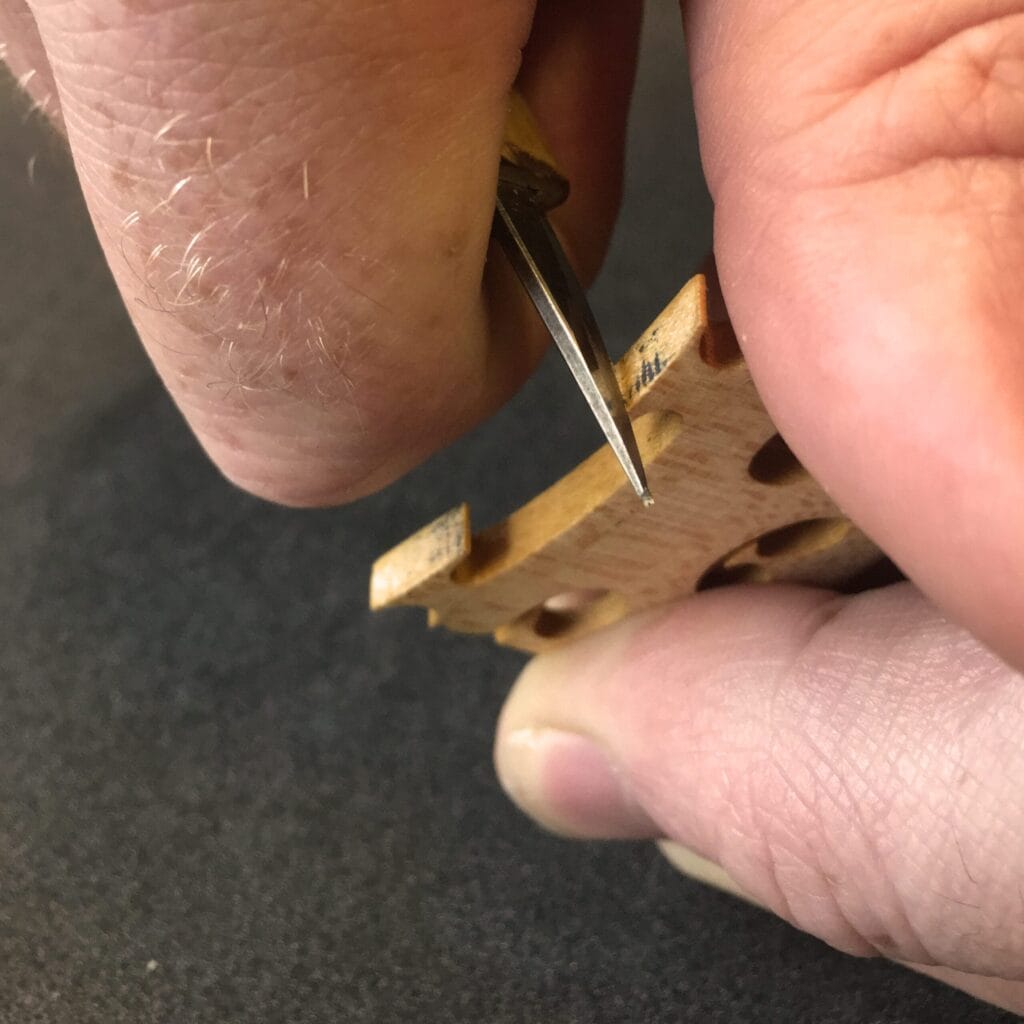
Every violin we hire goes through our Professional Setup Process.
Pro-Grade Strings: We strip factory wires and install high-quality strings for a warmer tone.
Luthier Bridge Fitting: Hand-carved bridges for perfect string height (no sore fingers).
Easy-Tune Pegs: We service the pegs so they actually stay in tune for your child.
Frequently Asked Questions
What size violin does a 7 year old need?
Many 7-year-olds use a 1/2 size violin, although arm length is the best guide.
What size violin does a 10 year old need?
A 3/4 size violin is common for many students aged around 9–11.
What size violin do adults use?
Most adults play a full size (4/4) violin.
Can violin sizes be exchanged during hire?
Yes. When hiring a violin it is easy to exchange sizes as students grow.